
Taylor County Arrest Report Sources
Start with the sheriff. The Taylor County Sheriff's Office posts no 72-hour, weekly, or historical arrest blotter. Its official page covers contact and jail information. There is no multi-day booking archive, no paging, no update stamp, and no stated booking-photo policy. So no official rolloff period exists. Any multi-day search must keep sheriff booking records separate from newspaper dispatch items and event-based news.
The strongest publication trail runs through NewzGroup, which preserves Bedford Times-Press and Lenox Time Table material. Old issues carry Taylor County dispatch logs, courthouse notices, and occasional sheriff items. Timing follows the newspaper issue, not jail intake. An entry may describe a call for service or a records inquiry. No arrest has to be involved. That kind of item can pin down a date or an agency. It cannot prove anyone entered custody.
Read Taylor County Arrest Reports
Begin with the source type. A sheriff booking record shows intake and custody. A dispatch log captures public-safety activity, a news story picks one incident, and a court docket tracks the legal case after filing. Work backward by date, but never merge sources into one timeline unless the identifiers match.
- Choose the date range. For a fresh custody question, use the Arrested Today workflow instead of relying on an issue archive.
- Review the local newspaper issue for the city, incident type, and agency. Treat each item as a lead, not a booking result.
- Contact the sheriff at 712-523-2153 to confirm whether Taylor County Jail received the person.
- Request the booking or intake record under Iowa Code chapter 22. Ask separately for any booking photograph.
- Use Iowa Courts Online to follow charges and disposition after a case is filed.
Cross-county movement complicates things. A Bedford man was arrested in Villisca. The warrant was Taylor County's, and a deputy later transferred him to the county jail. The arrest place and the warrant county can differ. Booking facility and court venue can differ too. Match the full name, event date, agency, and case number before treating two records as one event.
Taylor Arrest Log Field Meanings
No standard Taylor County arrest-log entry exists online. The table separates details often found in a dispatch item, a booking file, and a court docket; availability depends on the source and legal limits.
| Detail | Meaning and limit |
|---|---|
| Date and time | May be a call time, arrest time, intake time, or publication date. |
| Name | Must be matched with other lawful identifiers when names are common. |
| Agency | The arresting agency may differ from the jail that later books the person. |
| Location | A place named in a report does not by itself show where booking occurred. |
| Charge | An charge at intake, subject to amendment, dismissal, or court judgment. |
| Bond or status | May change after a hearing or transfer and needs a current check. |
| Photograph | Not part of a verified Taylor County public log; request it separately if needed. |
Every record has gaps. A newspaper summary may omit bond, release, or a later dismissal. The jail file may not show the final outcome, and the court docket may lack the booking photo. That is normal. Each record serves a different purpose.
Taylor Dispatch Logs Versus Custody
A Taylor County dispatch entry can cover almost anything. Callers request aid, appointments, traffic help, or copies of public records. One item logged a caller seeking a mugshot copy. So public-information requests do surface in local print. Still, that single item proves no photo policy and no booking.
The Bedford news page points readers toward local news coverage rather than a city police arrest feed.
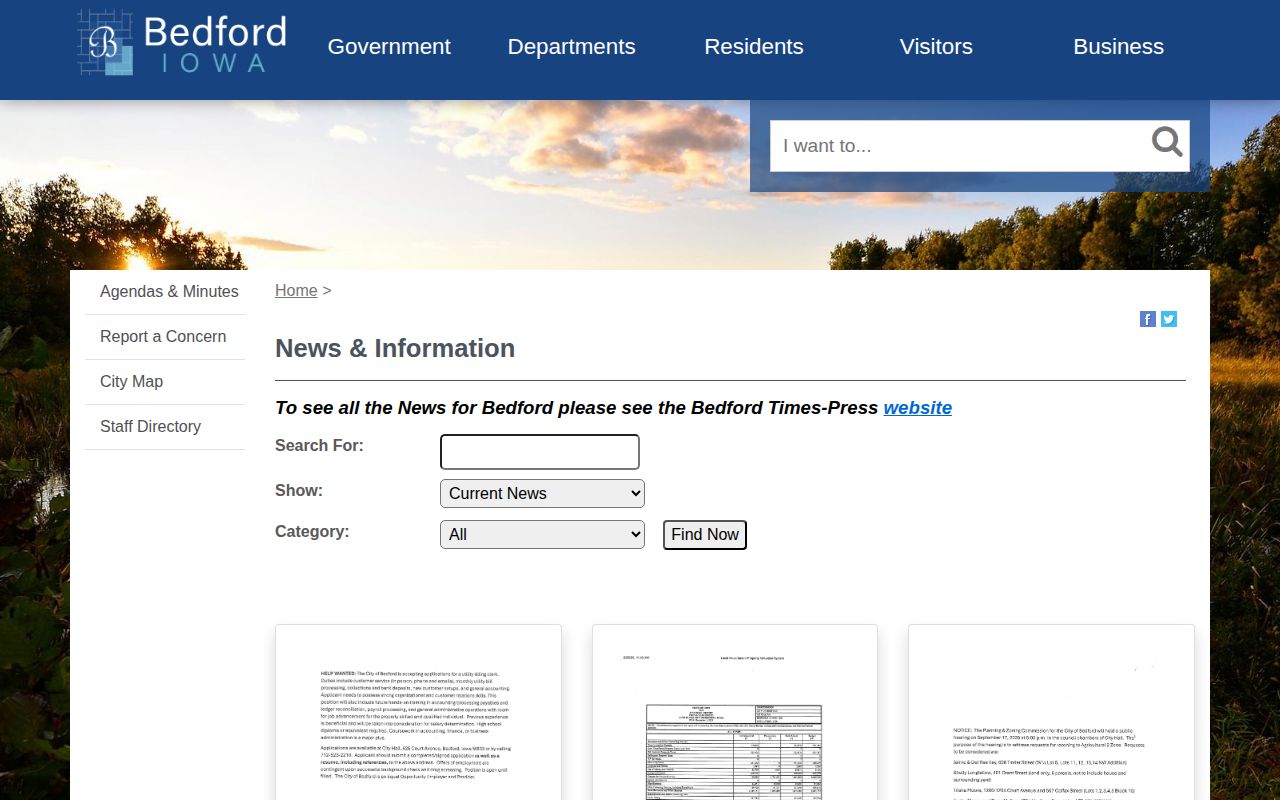
The city source helps you find reporting. For custody records, the sheriff is the official route. Read the verbs closely. In a dispatch log, words like called, reported, assisted, and requested never mean arrested or booked. Even when an item states an arrest, confirm the receiving jail and the record date. A person may be cited and released, held elsewhere, or transferred later, so local reports give context rather than a multi-day roster.
Taylor Arrest Archives and Retention
Taylor County has published no retention period for booking records or booking photographs. The public archive depth stays unknown. Ask the sheriff which approved schedule governs intake records. Ask whether a record was kept, destroyed, or transferred to another custodian. A vanished web entry does not prove destruction.
The State Historical Society keeps a Taylor County index. It lists old court, probate, recorder, and sheriff's-deed records, including sheriff's deeds from 1880 through 1926. Modern booking files and photos are not advertised there. Iowa Code section 22.16 covers public archives at least 100 years old, subject to restrictions. It promises no access to a recent mugshot.
For an old arrest report, start with the sheriff. For a court outcome, contact the Taylor County Clerk of Court. If a series was transferred, ask for the series name, accession, date range, and archive contact. If destroyed, ask which schedule and date controlled. Note: Retention and online visibility differ; a newspaper PDF can persist even after custody ends or an official system changes.
Regional Taylor Arrest Coverage
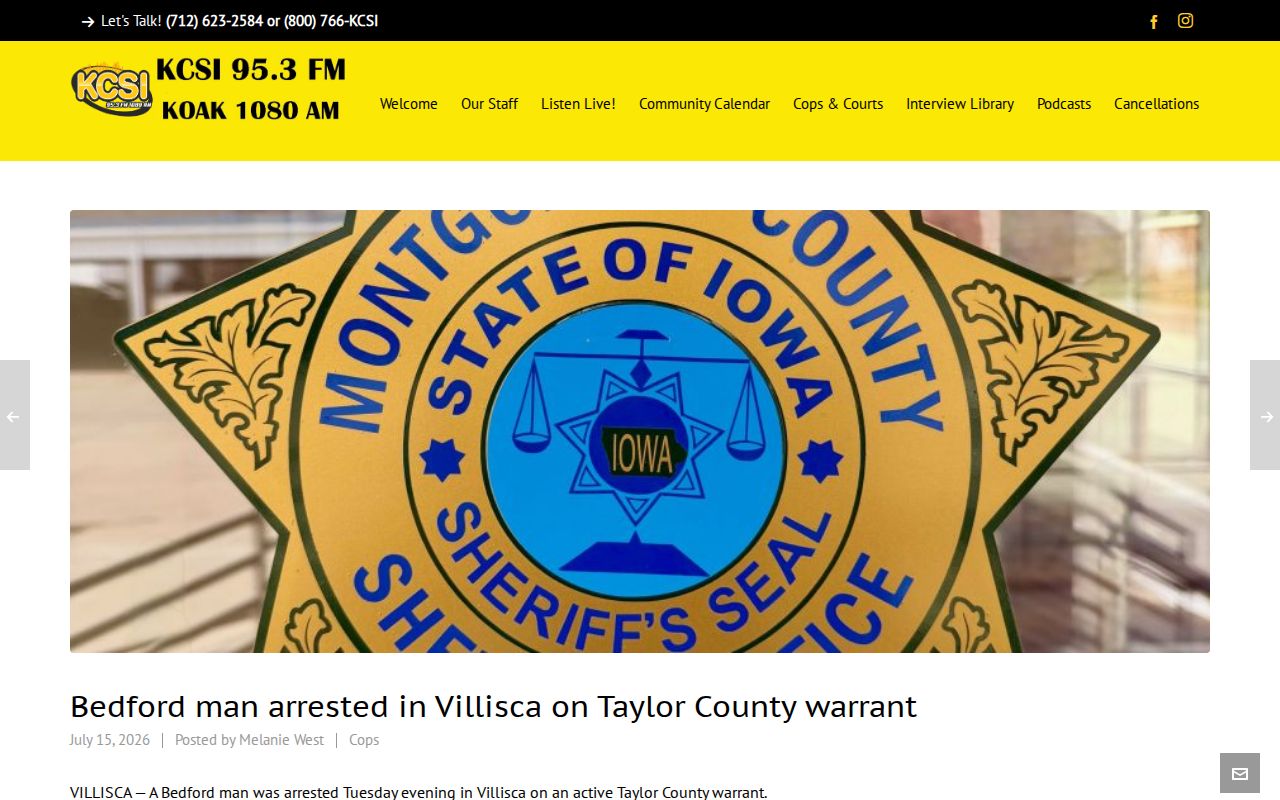
Regional news can explain agency movement better than a bare log. KCSI's warrant story is a good example. It documents an arrest outside Taylor County and a transfer to a deputy and the county jail. Still, it is one selected story. The sheriff publishes no daily mugshot gallery. The KCSI regional report shows the transfer context that a county-name search can miss.
A high-profile case shows how state agencies handle it. The Iowa DPS Clearfield release is an event-specific official source. It came from state investigators. It pairs a photograph with a statement about one incident. Treat it as an event release. It is not a standing Taylor County booking feed. For anything beyond that, the sheriff and the court docket remain the anchors.
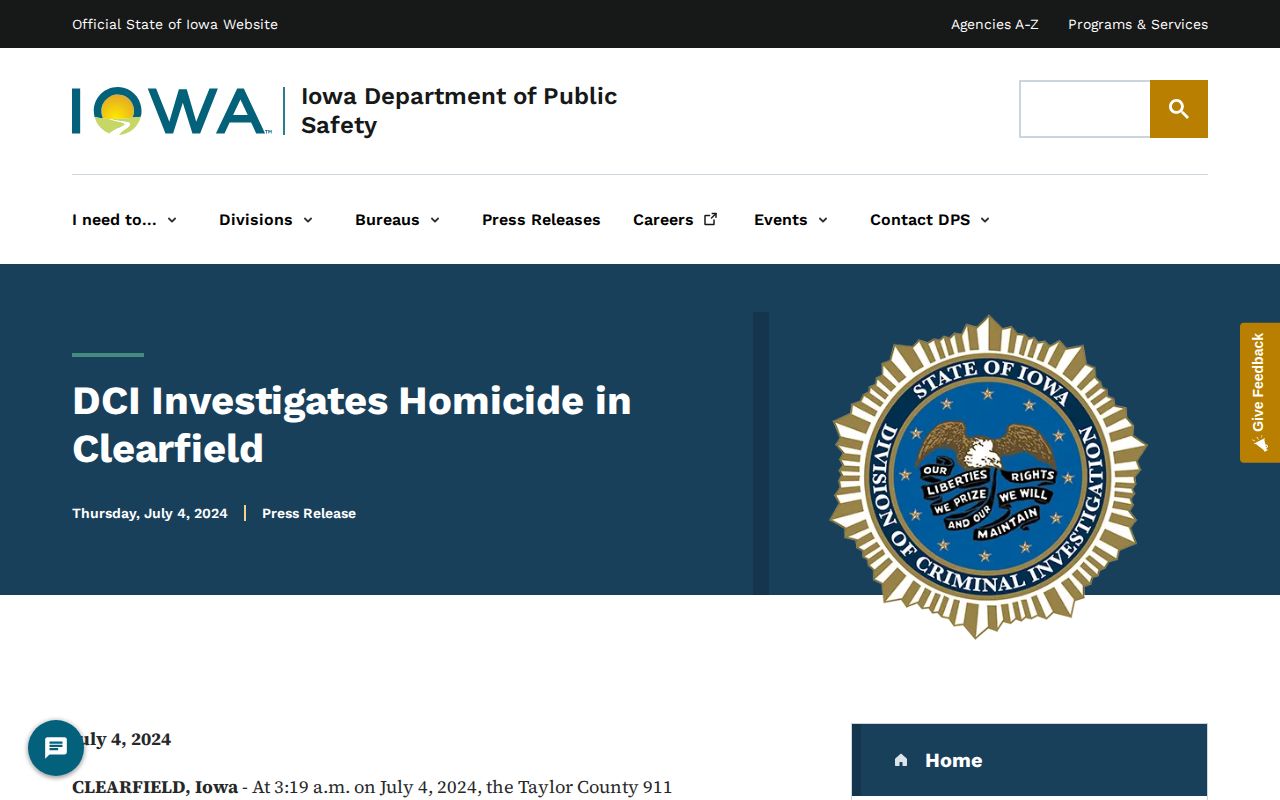
Its image and charge context cover that one incident only, not a reusable arrest gallery.
Request Older Taylor Arrest Records
The sheriff sets no special form, local copy fee, or fixed turnaround for booking records. Iowa Code chapter 22 permits requests through several channels and uses an actual direct-cost framework. Send a narrow request to the Taylor County Sheriff's Office, 1601 Justice Street, Bedford, IA 50833. Email works too, at sheriff@taylorcounty.iowa.gov. Ask that it reach the lawful records custodian. Name the person, a tight date range, and the booking number if known. Add the arresting agency if you have it. Say which parts you want: the intake sheet, charge and bond fields, release details, or a booking photograph. Request electronic delivery and a cost estimate. Juvenile, victim, medical, sealed, or investigative material may be withheld or redacted.
- Booking
- The jail intake event and its custody record.
- Dispatch log
- A record of public-safety calls and activity, not necessarily arrests.
- Disposition
- The court's later result, such as dismissal, acquittal, plea, or judgment.
- Retention schedule
- The rule that sets how long a record series must be kept.
Verify Taylor Arrest Report Dates
Dates on a Taylor County arrest report rarely tell one clean story. A dispatch date marks the call. The arrest itself may come later. Booking can trail the transport, and a court filing may follow after that. Newspapers print on their own schedule, which adds yet another date. Keep each label distinct rather than calling every stamp the arrest date. When a report crosses county lines, note where the arrest happened and where booking took place.
Lead with official sources. The sheriff handles custody and county booking. Iowa Courts Online carries the official docket. Iowa DPS releases speak only for the incidents they describe, but they carry official weight. Newspapers and regional radio add context, though they can miss events or publish late. The five major mugshot aggregators list no Iowa section, so Taylor County results from other states must be screened out.
A short source note saves trouble later. Record the publisher, the issue or event date, the agency named, and the custody location. Note whether the source is official. Then check whether the item reports an actual arrest or only a call for service. If a charge appears, keep the report's own wording and check the court docket for changes. Charges often shift before a case ends.